ParkNChargeEV is planning an app that lets EV drivers book home chargers and parking spaces by the hour. Its App Gameplan tested per-kWh billing against the chargers hosts actually own, replaced it with two hourly rates every host can use, and produced a signed-off Flutter prototype and a costed roadmap.
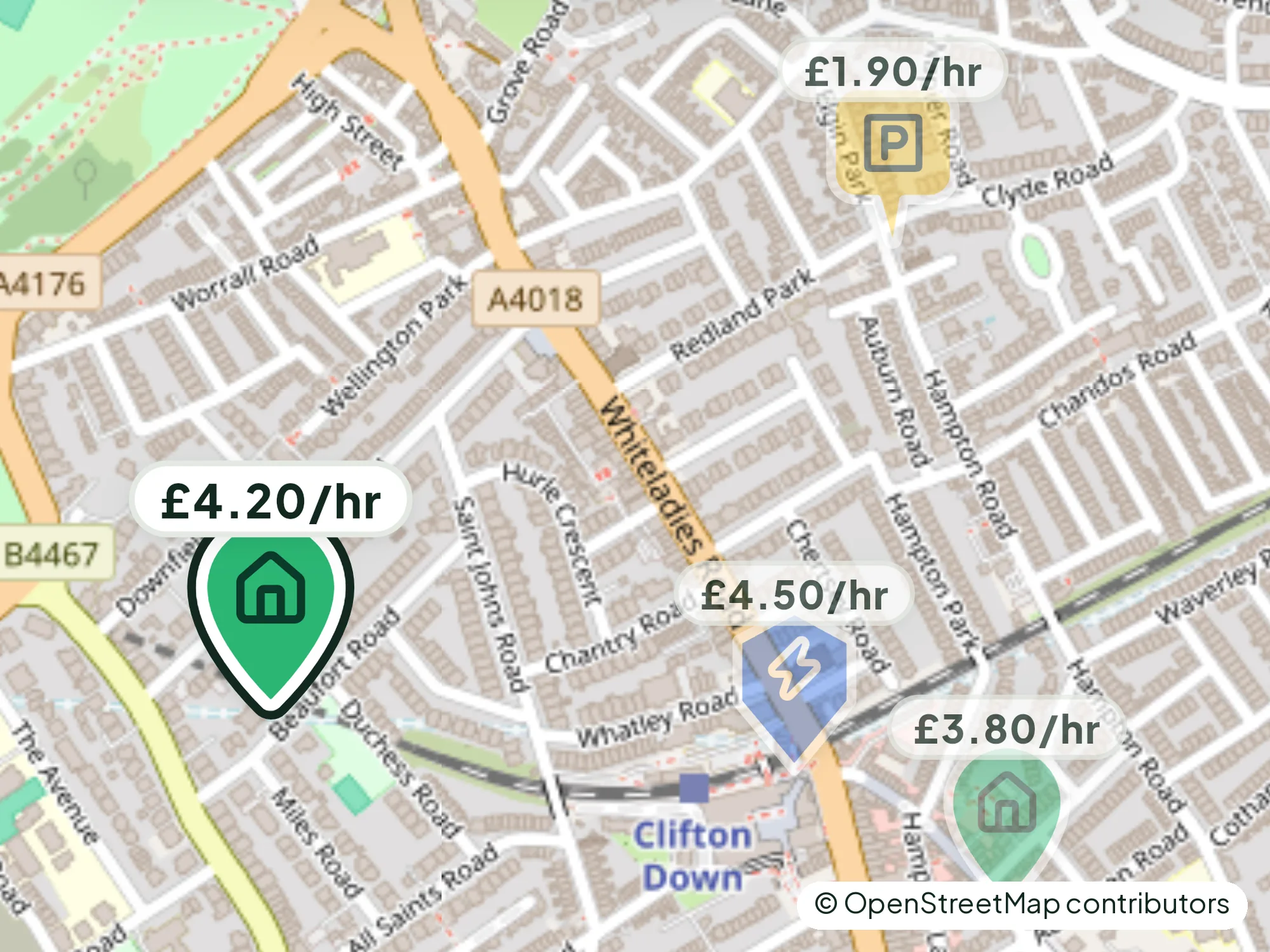
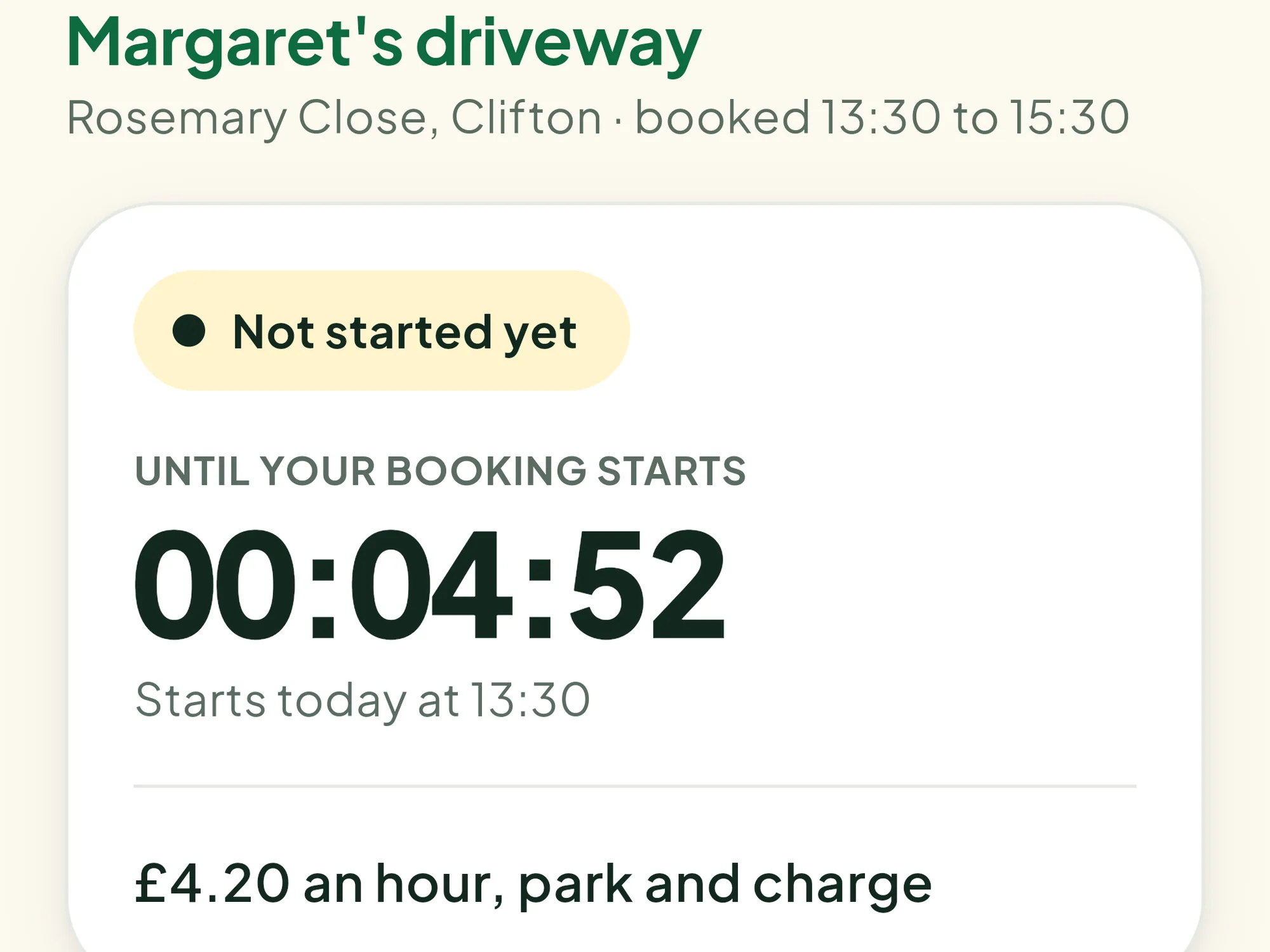
ParkNChargeEV is a planned app for EV drivers who need somewhere to charge away from home. People with a driveway and a home charger will list it, and drivers will book it by the hour. Public charge points and parking-only spaces sit on the same map.
The founder saw the gap from their own driving. Smaller towns and tourist spots have a handful of public chargers between them, often busy, while driveways nearby have chargers standing idle. They also wanted to leave the car for a few hours and walk away, which a rapid charger bay doesn't allow. No single app showed public chargers and private hosts together.
They came to us with a detailed functional specification and an early prototype of their own. The plan billed drivers for the exact kWh delivered, read from the charger and settled automatically. Before paying for a build, they needed to know whether that would work, what a first release should hold, and what it would cost.
After an App Gameplan they have:
A clickable prototype of the driver and host journeys, signed off and shareable by link or QR code
A design system the build carries forward
A first-release scope built around one map, instant booking and two hourly rates
An architecture recommendation covering the backend, payments, charger data and the rules that shape them
A costed roadmap for the first release and three later stages
The prototype's code, in their own repository
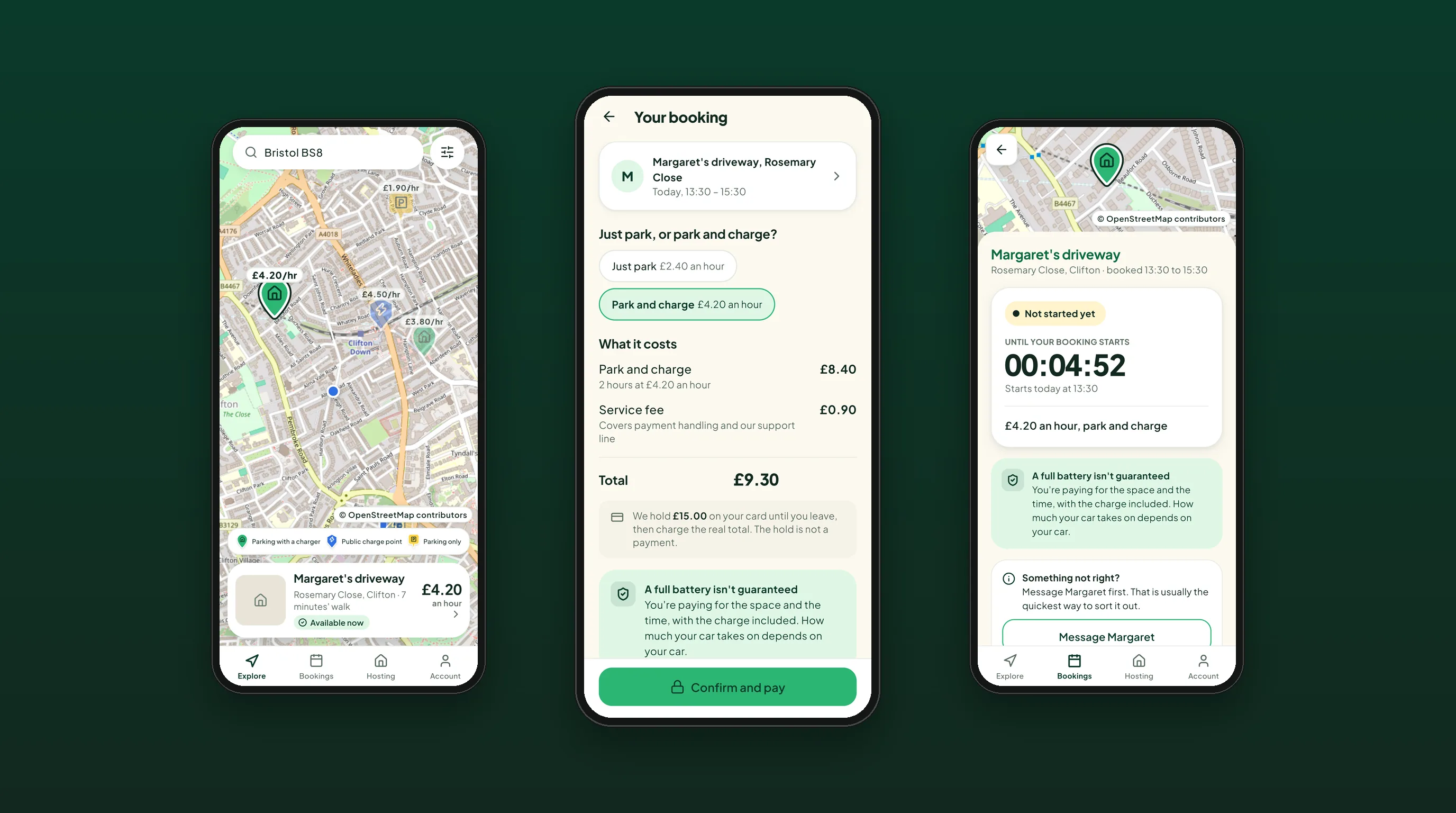
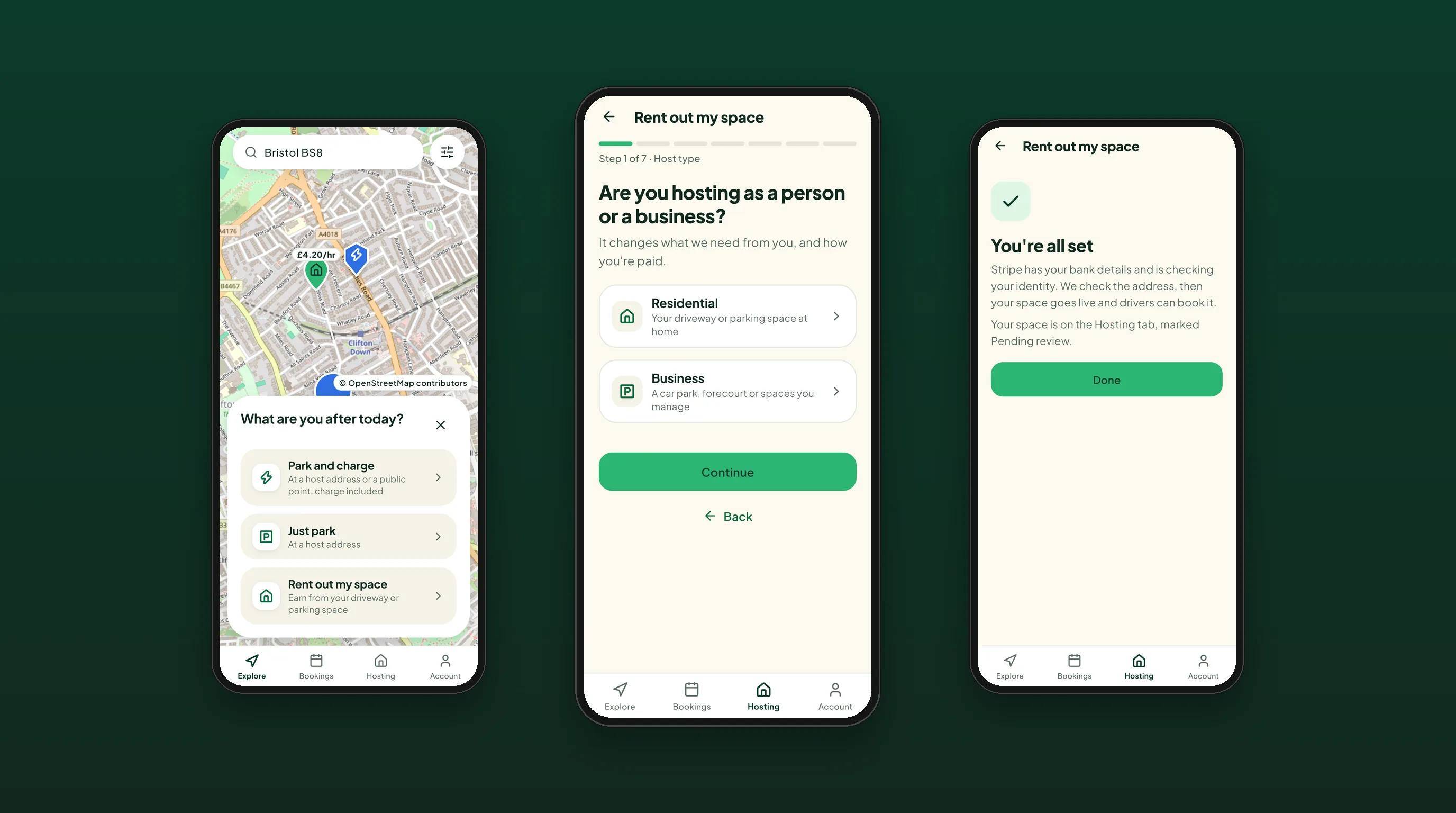
Billing by the kWh needs a meter reading you can charge money against. That has to come from the charger's own certified meter, read over OCPP, and when we checked the hardware in July 2026 only four brands could supply it end to end: Wallbox, Zaptec, myenergi Zappi and the EO Mini Pro 3. Pod Point, Ohme and Hypervolt couldn't. Enode, the charger-control service we assessed, says in its own documentation that its energy figures aren't revenue-grade. Reading the battery from the car didn't help either: VW Group and BMW have both closed third-party access, and the car's figure misses the energy lost as heat.
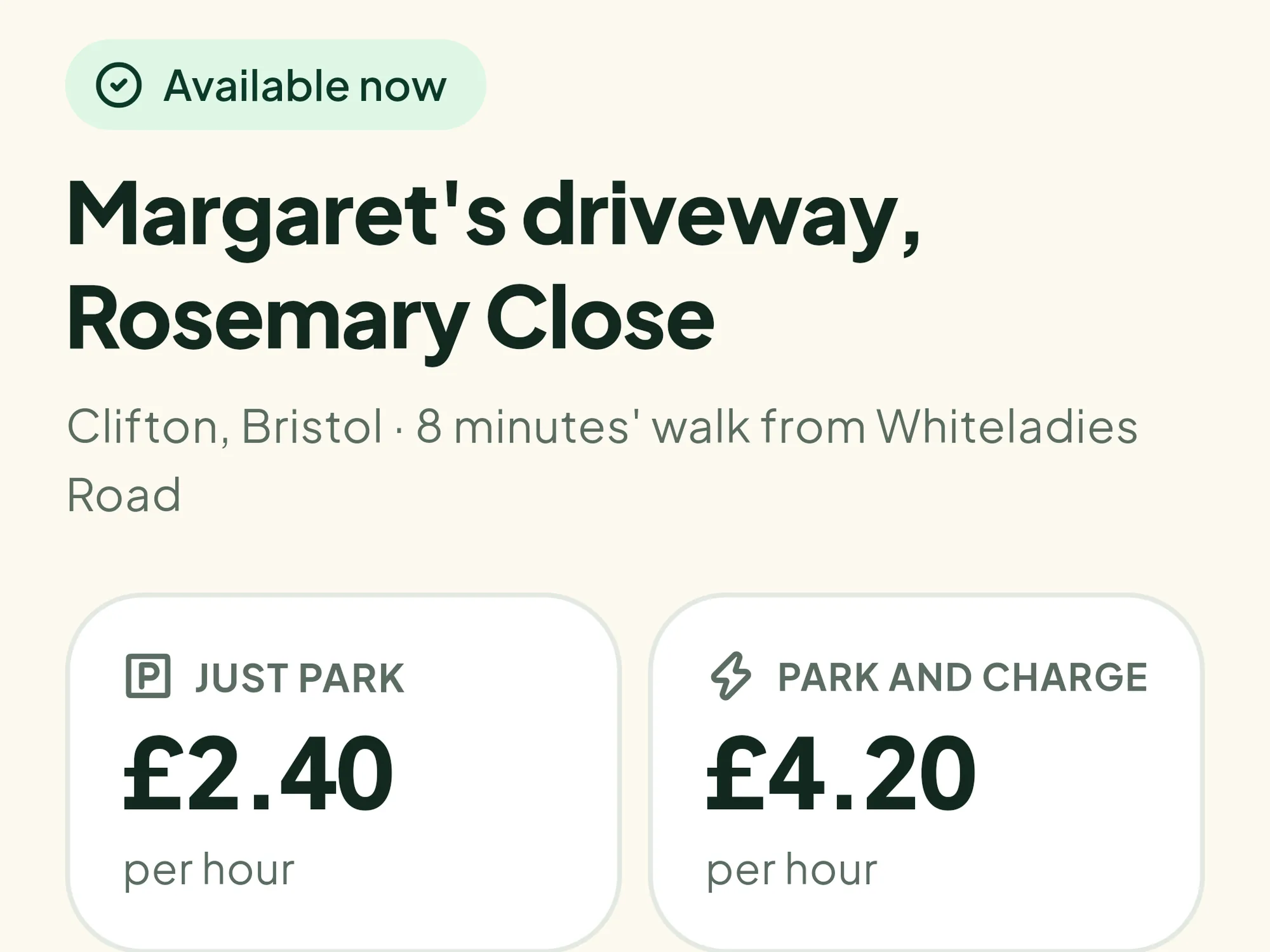
A metered model would have shut out most hosts. The Gameplan replaced it with two hourly rates set by the host, one to park and one to park and charge, with no kWh figure anywhere in the driver's journey. The founder then took metered billing out of every stage of the roadmap. The scan-at-the-charger step went with it, because a driver arrives having already booked and paid, and the session starts itself at the booked time.
We worked through the energy, consumer and tax rules before anything was costed. Under Ofgem's guidance hosts don't need a supply licence. Listings need a dedicated charger, since a host charging through a three-pin socket can't lawfully resell electricity above their own cost. Energy and the platform fee sit on separate lines on every receipt, so any future cap on resale would touch only the energy line. HMRC's platform reporting rules apply from the first booking, and the prototype's host sign-up already collects what they need. How the Public Charge Point Regulations treat a booked driveway has no case law yet, so the booking terms go to a solicitor before launch.
The original plan assumed the government's open register of public charge points. It was switched off in November 2024 and nothing open replaced it. We recommended Open Charge Map, which allows commercial use with each record's source credited, so public chargers appear at launch and live availability can follow in stage two. The map opens without a sign-up, and bookings confirm straight away, because a driver already on the road can't wait for a host to answer a message.
We built the prototype in Flutter between mid-August and early September: 162 reviewed changes, about 31,000 lines of app code across 19 feature areas and 27,000 lines of tests. Two rounds of the founder's review comments went in before sign-off. The screens, design system, validation rules and journey tests carry into the build. For the backend we recommended Supabase, which puts PostgreSQL, PostGIS location search, sign-in and file storage in one managed service, with Stripe Connect taking payments and paying hosts. CarPlay and Android Auto are feasible, and we recommended applying to Apple under its Parking category.
ParkNChargeEV goes into its build decision knowing which parts of the plan work. Metered billing, the riskiest part of the original idea, was tested against real charger hardware and dropped before any money went on it, and the hourly model that replaced it lets every host take part.
The founder has a signed-off prototype to show hosts, drivers and partners, and a first release costed item by item, with a leaner version and optional add-ons priced separately. After the estimates we reworked the first release with them: changing a booking became cancel and rebook, and host payouts run on Stripe's own holding period with no custom payout schedule to build.
The roadmap after that runs from live charger availability and route planning to CarPlay and Android Auto, then admin at scale and reporting tools. The prototype's code and hosting accounts are in the founder's name.